2027 Summer School for Actuaries
NEW STATISTICAL METHODS AND INNOVATIVE RISK MEASURES
International education program for actuaries – current topics & networking
Under the title “Rethinking Risk Management in Insurance: New Statistical Methods and Innovative Risk Measures”, the Summer School will focus on current developments in modern insurance risk management. The program will highlight new statistical methods, innovative risk measures, and the exchange of expertise between academia and industry.
Value-at-Risk (VaR) and Expected Shortfall (ES) are among the best-known risk measures and are key tools in insurance risk management. Recent research has yielded promising concepts that open up new perspectives on quantitative risk measurement using VaR and ES. The 2027 Summer School provides a compact and practical insight into these developments.
The first part focuses on novel risk measures that enable a more nuanced assessment of risk than VaR and ES, as well as their properties and application in portfolio optimization. In addition, the use of multi-criteria optimization in strategic asset allocation will be presented.
The second part of the Summer School addresses the concept of the Probability Equivalent Level of VaR and ES (PELVE), which establishes a natural link between VaR and ES. It will be demonstrated that PELVE provides valuable insights, particularly for assessing the tail of a distribution and, consequently, for risk measurement. PELVE is also used to determine an appropriate ES confidence level for a potential transition from VaR to ES in regulatory frameworks. Finally, so-called multi-asset and return risk measures are examined.
Content
- Fundamentals of Risk Measures
- Novel risk measures that enable greater flexibility and accuracy in risk assessment
- Portfolio optimization using novel risk measures
- Multi-criteria optimization and strategic asset allocation
- PELVE as a link between Value-at-Risk (VaR) and Expected Shortfall (ES)
- Benefits of PELVE for risk assessment and from a regulatory perspective
- Multi-asset and return risk measures
Language of instruction
English
Place
University of Klagenfurt, Stiftungssaal
Maximum number of participats: 30
Schedule
Monday, 24 May 2027 | 9:00 am – 5:00 pm
- Welcome and Introduction
- Basics on Risk Measures
- Adjusted Risk Measures
- Portfolio Optimization with (Adjusted) Risk Measures
- Exercise Session on Adjusted Risk Measures
- Networking Dinner sponsored
Tuesday, 25 May 2027 | 9:00 am – 5:00 pm
- Presentation Fraunhofer ITWM
- Strategic Asset Allocation (Part I)
- Strategic Asset Allocation (Part II)
- PELVE (Part I)
- Exercise Session on PELVE
- Field Trip & Conference Dinner
Wednesday, 26 May 2027 | 9:00 am – 1:00 pm
- PELVE (Part II)
- Multi-Asset and Return Risk Measures
Speaker
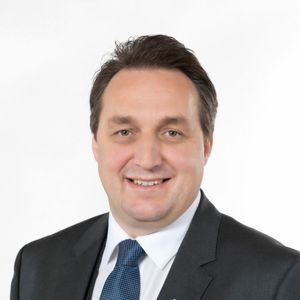
Christian Laudagé
Department of Mathematics, RPTU Kaiserslautern-Landau, Germany
Dr. Christian Laudagé is a postdoctoral researcher in the Financial Mathematics Group at RPTU University Kaiserslautern-Landau since January 2023. In 2022, he held a postdoctoral position in the Institute of Financial Mathematics and Applied Number Theory at the Johannes Kepler University Linz. His research focuses on the construction and properties of new types of risk measures and their application in risk management. His work has been published in leading actuarial journals, including ASTIN Bulletin, Insurance: Mathematics and Economics, and Scandinavian Actuarial Journal. From 2017 to 2021, he was a member of the Financial Mathematics Group at Fraunhofer ITWM, where he contributed to several insurance-related projects. His Bachelor’s and Master’s theses were written in cooperation with the Gothaer insurance company.

Jörg Wenzel
Deputy head of the Financial Mathematics Department at the Fraunhofer Institute for Technical and Economic Mathematics (ITWM) in Kaiserslautern.
After studying mathematics and earning his Ph.D. (1993) at the Institute of Mathematics at Friedrich Schiller University in Jena, he spent a year as a postdoctoral researcher at Texas A&M University in College Station, worked as a research assistant at Friedrich Schiller University in Jena, and served as an associate professor at the University of Pretoria in South Africa. In 2003, Jörg Wenzel completed his habilitation at Friedrich Schiller University in Jena.
Mr. Wenzel has been working in the Department of Financial Mathematics at Fraunhofer ITWM since 2004, where he has led several projects in the areas of financial instrument valuation, life insurance, and retirement planning. He has been deputy department head since 2011 and served as department head from 2020 to 2025.

Philip Biegel
Doctoral Researcher, Department of Mathematics, RPTU Kaiserslautern-Landau
Philip Biegel is a doctoral researcher in the Department of Mathematics at RPTU Kaiserslautern- Landau. His research focus lies in mathematical finance and risk management, with a particular interest in robust portfolio theory, model uncertainty, and risk-sensitive approaches to financial and insurance risk management.

Organizing Commitee
Univ.-Prof.in DIin Dr.in Michaela Hitz
is Professor of Stochastic Processes at the University of Klagenfurt (AAU).
Her research interests focus on numerical methods and the analysis of stochastic differential equations and their applications in machine learning, energy markets, and financial and actuarial mathematics.
After completing her doctorate at the Johannes Kepler University in Linz, she worked as a postdoc at the Vienna University of Economics and Business. Afterwards, financed by a scholarship from the AXA Research Fund, she was a postdoctoral researcher at the Seminar for Applied Mathematics at ETH Zurich and an associated employee at RiskLab Switzerland.
She is currently the coordinator of the FWF doc.funds doctoral school for modeling – analysis – optimization of discrete, continuous and stochastic systems. Univ.-Prof. DI Dr. Michaela Hitz is a member of the advisory board of the Austrian Actuarial Association (AVÖ).
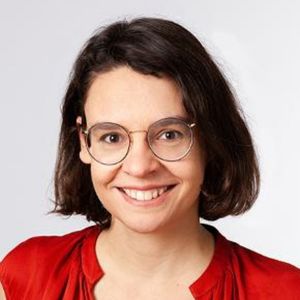
DI Dr. Jürgen Hartinger
Jürgen Hartinger has been a member of the board at Kärntner Landesversicherung (KLV) since 2014.
After completing his doctorate at TU Graz with the focus on actuarial and financial mathematics, he served as a research scientist at RICAM (ÖAW).
When joining the KLV in 2006, he headed the actuarial office. His duties included the implementation of quantitative methods in enterprise risk management and Solvency II.